Aura vs Surfshark
You go looking for a VPN and end up choosing between very different promises. Some services focus tightly on hiding your traffic and staying fast, while others bundle a VPN into a broader safety package that includes tools you may or may not actually use. This friction shows up quickly once daily habits kick in. A connection that works fine for browsing might feel limiting for streaming, or a security bundle might feel heavy when all you wanted was simple protection.
This comparison matters because Aura and Surfshark represent two distinct ways people now buy online privacy. One leans into an all-in-one model that mixes identity protection, monitoring, and security tools alongside a VPN. The other is built around the VPN itself, with scale and flexibility as core priorities. Users often choose based on surface features, then realize later that the service fits some situations well and others poorly.
Continuing will help clarify what those differences mean once the service becomes part of everyday life. You will see how these approaches affect real usage, from travel and remote work to protecting multiple devices at home. Rather than pushing one style over the other, the goal is to highlight the practical boundaries, trade-offs, and expectations that shape whether Aura or Surfshark aligns better with how you actually use the internet.
Table of Contents
Key Points
- Aura bundles a VPN with identity protection, antivirus, and credit monitoring, and it generally covers around 80 countries while offering core VPN basics like a kill switch and split tunneling. The main drawback is limited transparency around its VPN infrastructure and technical details, including server counts and clearly documented protocol options.
- Surfshark is a stand-alone VPN with 4,500+ servers across 100 countries, unlimited simultaneous connections, and advanced VPN tools like MultiHop and traffic obfuscation features designed to work better in restrictive networks.
- If you want whole-network protection without installing apps on every device, a plug-and-play hardware VPN router can be simpler than either service, especially in households with smart TVs, consoles, and lots of guest devices.
Quick Comparison: Aura vs Surfshark
| Feature | Aura | Surfshark |
|---|---|---|
| Headquarters | United States, part of a broader identity-protection platform | Netherlands, with a no-logs stance that has been independently reviewed in public-facing reports |
| Server count | Undisclosed, with an emphasis on virtual locations rather than a clearly published server inventory | 4,500+ servers |
| Countries/locations | Approximately 80 countries | 100 countries |
| Simultaneous devices | 10 devices per user on typical plans | Unlimited devices |
| Starting price (monthly) | Typically around US$12/month when billed annually for the first term, with pricing that can change at renewal depending on the offer and plan structure | Approximately US$1.99/month on a long-term plan, with higher pricing on shorter subscriptions |
The two services take very different approaches. Aura wraps a VPN into a wider security suite, so the entry price is usually higher and the VPN side is not as “feature-forward” as a dedicated provider. That can still make sense if you actually want the bundle, because paying for identity monitoring and antivirus separately can add up quickly.
Surfshark stays focused on VPN performance and flexibility, with far more servers, unlimited connections, and extra tools like obfuscation and MultiHop, often at a lower effective monthly price on longer plans. If you mostly want a VPN for streaming, travel, gaming, or day-to-day privacy, Surfshark tends to deliver stronger value as a pure VPN.
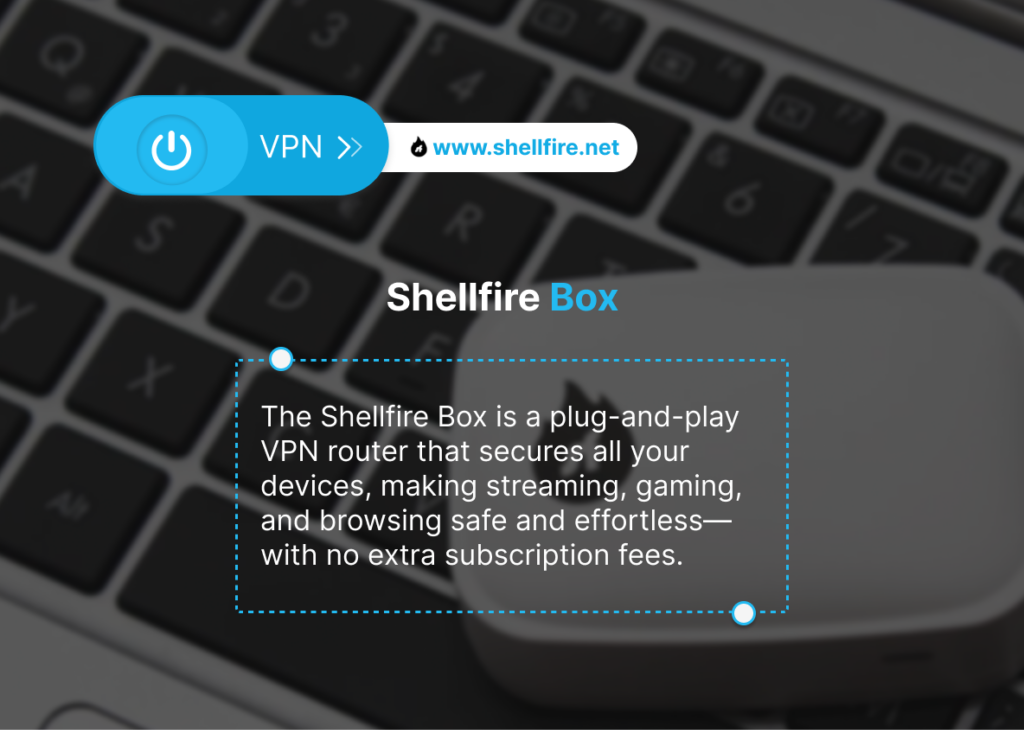
Users who want to secure every device on their home network without juggling apps may find that a hardware-based VPN router or a simple VPN app like the Shellfire VPN or the Shellfire Box provides more convenient coverage. This is especially handy for smart TVs and consoles, where VPN apps are often missing or awkward, and for households where “set it once and forget it” is the goal.
Infrastructure & Global Coverage
| Infrastructure | Aura | Surfshark |
|---|---|---|
| Server count | Unknown number of servers, with coverage described mostly through virtual locations across North America, Europe, Asia, Oceania, and parts of Africa | 4,500+ RAM-only servers across 100 countries |
| Physical vs virtual | Primarily virtual locations, with limited public detail on physical presence or server architecture | Primarily physical servers, with some virtual locations for hard-to-reach regions, and an all RAM-only design for privacy |
| Special regions | Less transparent overall, with many locations concentrated in the United States and a smaller selection elsewhere | Broad coverage including Africa and the Middle East, and P2P support across the network |
Aura runs a smaller network and leans heavily on virtual locations. It lists coverage in roughly 80 countries, but it doesn’t publish how many servers are actually behind those locations. In practice, that matters because “80 countries” can mean wildly different things depending on capacity. If a location is virtual or lightly provisioned, it can get crowded faster, and you may feel it in peak-hour speeds.
From what reviewers have observed, many of Aura’s options cluster in the United States and parts of Europe, with fewer practical choices in Asia and Oceania. That can still be fine for everyday browsing and basic privacy, but it may feel limiting if you regularly connect far from your home region, need very specific geo-locations, or want consistently low latency for gaming.
Surfshark comes at this from the opposite angle. With thousands of servers and presence in 100 countries, you get more nearby options, which usually means lower latency and fewer “okay, let me try another server” moments. The fact that Surfshark uses RAM-only servers is also relevant for privacy. In simple terms, RAM-only infrastructure is designed so that servers don’t store data long-term on a hard drive, which reduces risk if a server is seized or compromised. It’s not a magic shield on its own, but it’s a meaningful layer in a modern VPN setup.
For practical use, the bigger difference is choice and consistency. Surfshark’s network is generally strong enough for international streaming, remote work, and travel scenarios where you need a stable connection across borders. It also includes features intended for tougher environments, like restrictive networks that try to identify and throttle VPN traffic.
Speed & Performance
| Metric | Aura | Surfshark |
|---|---|---|
| Typical download/upload | Nearby servers tend to keep performance usable, but long-distance connections can drop sharply, which is noticeable for large downloads and 4K streaming | With WireGuard, many tests show strong retention of baseline speed, often staying fast enough for 4K streaming, gaming, and big file transfers |
| Latency | Local ping increases are usually manageable, while faraway servers can introduce high latency that impacts gaming and real-time calls | Typically low latency on nearby servers, with better stability across regions thanks to a larger server pool |
| Performance stability | More variable across locations, likely influenced by the smaller network and virtual presence | Generally consistent, helped by RAM-only infrastructure, optimized protocols, and a large number of alternatives when a server is busy |
In speed tests, Aura tends to be “fine” when you connect close to home. That’s the experience many people will have if they mostly use a VPN for safer browsing on public Wi-Fi or light streaming. Where the cracks show is long-distance use. If you’re in Europe connecting to Australia, for example, a smaller network can mean fewer routes, more congestion, and bigger drops in throughput. The end result is the classic VPN frustration: buffering, slower downloads, and occasional hiccups during video calls.
Surfshark has a stronger reputation on speed, especially when using WireGuard. In real-world terms, that means you’re more likely to forget the VPN is even on. Pages load normally, 4K streams are less likely to stutter, and online games are generally smoother when you pick a nearby server. It’s also worth noting that unlimited device connections only feels “free” if performance can keep up, and the larger network helps with that.
One small but practical point, stability often matters more than raw peak speed. A VPN that swings between fast and slow depending on the server can be annoying if you’re working, gaming, or streaming live sports. On that front, Surfshark usually benefits from having more alternate servers in the same country or region, so you can hop if one location is overloaded.
Security & Privacy
| Security feature | Aura | Surfshark |
|---|---|---|
| Encryption | 128-bit AES, with limited user control over technical settings | 256-bit AES-GCM and ChaCha20, with perfect forward secrecy |
| Protocols | Not clearly disclosed in a way typical VPN users can verify, which reduces transparency for advanced users | WireGuard, OpenVPN, and IKEv2, plus privacy-oriented routing features like MultiHop |
| Kill switch & leak protection | Includes a kill switch and DNS leak protection, and these basics generally work as expected in routine testing | System-level kill switch, DNS leak protection, and consistent behavior across major apps |
| Logging & audits | Collects some session-related and anonymized browsing/domain data per its published policies, with no widely cited independent VPN audit | No-logs positioning supported by external audit references, with clear privacy tooling and published security information |
| Jurisdiction | United States | Netherlands |
| Extra features | Split tunneling, automation on untrusted networks, and some blocking tools on higher tiers | Obfuscation-style modes (Camouflage/NoBorders), MultiHop, CleanWeb blocking, static IP options, and Alternative ID-style features |
Aura uses 128-bit AES encryption and keeps the VPN experience fairly locked down, which can be convenient for beginners but frustrating for anyone who likes to verify technical details. The bigger issue is transparency: if a provider doesn’t clearly communicate protocols and network architecture, it’s harder to evaluate the VPN side as a standalone privacy tool. Also, Aura’s broader identity-suite model means data handling may look different than a VPN-only brand. According to its published policies, it can collect certain session-related identifiers and anonymized domain-level information, which may not bother casual users, but it’s not the ideal setup for people who want the tightest possible privacy posture.
Surfshark, by contrast, plays in the “VPN nerd-friendly” zone. Strong encryption (256-bit AES-GCM and ChaCha20), multiple protocol choices including WireGuard, and extra privacy options like MultiHop are all relevant if you care about minimizing data exposure and avoiding correlation. The audited no-logs positioning also helps with trust, especially compared to services that rely only on marketing language. If your priority is security hardening, privacy-first design, and features that can help you blend in on restrictive networks, Surfshark is clearly the stronger package.
Streaming Performance
| Platform | Aura | Surfshark |
|---|---|---|
| Netflix | Works with U.S. Netflix and a limited number of other regions, but success varies and may require repeated server switching | Unblocks multiple Netflix libraries across regions with a high success rate |
| BBC iPlayer & Disney+ | Occasional access, but connections can be inconsistent and unreliable over time | Reliable access to BBC iPlayer, Disney+, and other major streaming platforms |
| Video quality & stability | 4K streaming is possible when a connection works, but buffering and retries are common | Consistent 4K playback with minimal buffering on compatible connections |
| Blocks & CAPTCHAs | Frequently blocked by Hulu and Amazon Prime Video, and more likely to trigger CAPTCHAs | Rarely blocked, with Smart DNS support for devices that cannot run VPN apps |
Streaming is one of the areas where the differences between these services are easiest to feel in everyday use. Aura doesn’t operate streaming-optimized servers, and that shows. While it can sometimes access Netflix U.S., BBC iPlayer, or Disney+, the experience is inconsistent. One evening it works, the next it doesn’t, and you may find yourself hopping between servers hoping to get lucky. Hulu and Amazon Prime Video are particularly strict, and in many cases they simply block Aura connections outright.
Surfshark is far more reliable for streaming. It consistently unblocks a wide range of services, including Netflix libraries in multiple countries, Disney+, BBC iPlayer, Hulu, and Amazon Prime Video. Combined with its higher average speeds, that reliability translates into smooth 4K playback without constant buffering. For frequent travelers, expats, or families sharing one account across devices, that predictability matters more than headline server counts.
Looking for reliable streaming access across all devices?
Our Shellfire Box is designed to provide consistent access to your favorite streaming platforms, which can be a helpful solution if you’re experiencing issues with other VPNs.
Platform Compatibility
| Platform | Aura | Surfshark |
|---|---|---|
| Desktop OS | Windows and macOS, with the VPN embedded inside the broader Aura dashboard | Windows, macOS, and Linux, including both graphical and command-line options |
| Mobile OS | Android and iOS apps that closely mirror the desktop interface | Android and iOS apps with the full feature set and simple one-tap connections |
| Smart TVs & streaming devices | No dedicated apps, requiring router-level workarounds | Apps for Fire TV and Android TV, plus Smart DNS for unsupported devices |
| Consoles & routers | No native console support, and no official router configuration guides | Manual router setup and Smart DNS options for consoles and media devices |
| Browser extensions | Not available | Chrome and Firefox extensions with built-in blocking features |
Aura integrates its VPN directly into a single identity-protection interface. That can feel neat and tidy once you get used to it, but it also limits flexibility. There’s no standalone VPN app, no browser extensions, and no dedicated support for smart TVs or streaming boxes. If most of your online activity happens on a laptop or phone, this might be fine. If your household includes consoles, smart TVs, and media sticks, it quickly becomes restrictive.
Surfshark is much more accommodating across platforms. Native apps exist for almost everything, including Linux, and Smart DNS fills in the gaps where VPN apps aren’t an option. Browser extensions are a nice bonus for lightweight protection, and router support gives more advanced users additional flexibility. If device compatibility matters, especially in multi-device households, Surfshark is clearly easier to live with. Readers interested in a deeper provider comparison can also explore our Surfshark vs PureVPN guide.
Performance in Censorship-Heavy Countries
| Region | Aura | Surfshark |
|---|---|---|
| China | Not officially supported and lacks obfuscation features, making connections unreliable or impossible | Camouflage and NoBorders modes help disguise VPN traffic and improve success rates |
| Russia & Middle East | Limited reliability due to smaller network and lack of stealth protocols | Better success thanks to obfuscation and wider regional coverage |
| Other regions | Usable for casual browsing, but access and speeds can vary significantly | Generally stable across restrictive environments when the right modes are enabled |
Aura is not designed with censorship-heavy environments in mind. It doesn’t advertise stealth or obfuscation modes, and it openly states that it may not function in countries like China. For travelers passing through restrictive regions, that uncertainty alone is a deal-breaker.
Surfshark offers tools specifically meant to handle these situations. Camouflage mode helps VPN traffic blend in with regular HTTPS traffic, while NoBorders mode is designed to kick in automatically on restricted networks. These features don’t guarantee access everywhere, no VPN can honestly promise that, but they significantly improve the odds compared to services without any stealth capabilities.
User Experience & Apps
| Criteria | Aura | Surfshark |
|---|---|---|
| UI design | Centralized identity dashboard with multiple modules and menus | Clean, modern VPN-focused interface with optional light and dark themes |
| Ease of use | Simple connection once set up, but onboarding takes longer due to identity verification steps | Quick sign-up and one-click connect, with features clearly labeled and accessible |
| Stability | Generally stable once connected, with a functioning kill switch | Very stable connections, helped by protocol optimization and automatic recovery features |
| Learning curve | Steeper at first, especially for users who only want a VPN | Gentle, even for first-time VPN users |
| Customization | Limited, with few technical options exposed to the user | Extensive customization, including protocol selection, split tunneling, and MultiHop |
Because Aura combines several security products into one interface, it can feel cluttered if your only goal is to turn on a VPN and get on with your day. There’s a bit more friction during setup, and some users may find themselves clicking through features they never plan to use. On the upside, once everything is configured, connections are stable and largely hands-off.
Surfshark feels purpose-built for VPN use. The apps are intuitive, servers are easy to browse, and advanced settings are there if you want them, but they’re not shoved in your face. Features like split tunneling and MultiHop are just a toggle away, not buried in submenus. For users who like control without complexity, it strikes a good balance. If you’d rather avoid managing apps altogether, a plug-and-play option like the Shellfire Box may be an even simpler route.
Customer Support
| Support channel | Aura | Surfshark |
|---|---|---|
| Live chat | Available, but typically starts with an automated assistant before reaching a human agent | 24/7 live chat with human support agents |
| Email & tickets | Email-based support with response times that can stretch into several hours | Email and ticket support, with responses often arriving within a few hours |
| Documentation | Basic help articles focused more on identity protection than VPN troubleshooting | Extensive knowledge base covering setup, troubleshooting, and advanced features |
| Phone support | Not offered | Not offered |
Aura does provide live chat, but the experience often starts with a chatbot. You can reach a human, though it usually takes a minute or two and sometimes a bit of persistence. Email support works, but it’s not particularly fast, which can be frustrating if your VPN connection suddenly stops working right before a call or a flight.
Surfshark generally feels more responsive. Live chat is available around the clock and connects you to a human agent quickly. The support team is used to VPN-specific questions, whether that’s choosing the right protocol, troubleshooting streaming access, or setting things up on a router. That kind of focused help can save a lot of time when something goes wrong.
Additional Features
| Feature | Aura | Surfshark |
|---|---|---|
| Port forwarding | Not supported | Not supported |
| Ad/tracker blocking | Available on select plans as part of Safe Browsing tools | CleanWeb blocks ads, trackers, and known malicious domains |
| MultiHop/VPN chaining | Not available | Available, routing traffic through two servers for added privacy |
| Static IP | Not offered | Available as an add-on in selected regions |
| Split tunneling | Supported on some devices, with limited configuration options | Supported on Windows, Android, and select macOS versions with granular control |
| Automation / smart rules | Automatically connects on untrusted Wi-Fi networks | Connection recovery and stability features help maintain continuous protection |
Aura includes a few useful extras, especially for users who like the idea of automatic protection on public Wi-Fi and built-in blocking tools. Still, most of these features are relatively basic on the VPN side and feel secondary to the broader identity-protection focus.
Surfshark offers a much more complete VPN toolkit. CleanWeb reduces everyday annoyances like ads and trackers, MultiHop adds an extra layer for privacy-conscious users, and static IP options are helpful for remote access or services that expect a consistent address. These are the kinds of details power users tend to notice and appreciate.
VPN Use Cases: Best Options for Streaming, Gaming, Torrenting & More
| Use case | Aura | Surfshark |
|---|---|---|
| Streaming | ⭐⭐⭐ | ⭐⭐⭐⭐⭐ |
| Torrenting / P2P | ⭐⭐ | ⭐⭐⭐⭐ |
| Gaming | ⭐⭐⭐ | ⭐⭐⭐⭐ |
| Remote work | ⭐⭐⭐ | ⭐⭐⭐⭐⭐ |
| Budget-conscious users | ⭐⭐ | ⭐⭐⭐⭐ |
| Users in censorship-heavy countries | ⭐ | ⭐⭐⭐⭐ |
Best VPN for Streaming
For streaming, Surfshark is the more dependable option. It consistently unlocks major platforms like Netflix, Disney+, BBC iPlayer, Hulu, and Amazon Prime Video, and it does so without the constant trial-and-error that frustrates many VPN users. High speeds help maintain stable 4K playback, even when you connect across regions. Aura can sometimes access U.S. libraries, but frequent blocks and inconsistent results make it hard to rely on for regular streaming.
If you prefer to protect streaming devices without installing apps on each one, the Shellfire Box offers an easy, plug-and-play way to bring VPN protection to smart TVs and consoles.
Best VPN for Torrenting / P2P
Surfshark again comes out ahead for torrenting. P2P traffic is allowed across the network, speeds are generally strong, and features like a kill switch and split tunneling make it easier to secure your torrent client without slowing down everything else. Aura technically supports P2P, but performance is inconsistent and the smaller network limits practical usability for frequent file sharing.
Best VPN for Gaming
Low latency and stability matter most for gaming. Surfshark benefits from its WireGuard implementation and wide server selection, which helps keep ping times low on nearby servers. Aura can handle casual gaming on local connections, but higher latency on distant servers makes it less suitable for competitive play.
Best VPN for Remote Work
Remote workers often need a balance of speed, privacy, and flexibility. Surfshark performs well here thanks to fast connections, unlimited devices, and split tunneling that lets you fine-tune how work and personal traffic are routed. Its privacy-focused setup also makes it easier to connect securely from different countries. Aura may appeal to freelancers who value bundled identity protection, but its VPN limitations become noticeable under heavier workloads.
Best VPN for Budget-Conscious Users
If price is a major factor, Surfshark offers strong value on long-term plans, especially when you factor in unlimited connections for the entire household. Aura costs more, but it includes identity monitoring, antivirus, and credit alerts. That bundle can make sense if you would otherwise pay for those services separately.
Best VPN for Censorship-Heavy Countries
In restrictive regions, stealth features are essential. Surfshark offers modes designed to hide VPN usage and improve connectivity under censorship. Aura lacks these capabilities and does not officially support use in highly restricted environments, making it a risky choice in such scenarios.
Conclusion
Aura and Surfshark approach online protection with clearly different priorities, which is why they appeal to different types of users. Aura treats the VPN as one element inside a broader digital safety package, where identity monitoring and prevention tools carry as much weight as the connection itself. That model works best when VPN use is occasional and convenience matters more than fine-grained control. Surfshark, by contrast, puts the VPN at the center, emphasizing flexibility and consistency in everyday scenarios.
The more suitable option depends on what role a VPN plays in your routine. If you mainly want background protection bundled with identity-focused services, Aura can feel sufficient and easier to manage. If streaming, remote work, gaming, or frequent travel are regular activities, Surfshark tends to fit better thanks to its VPN-first focus. Neither approach is universally better. The decision becomes clearer when you consider how often you rely on the VPN itself versus the surrounding security features.
Some users prefer to avoid juggling apps, plans, or bundled extras altogether. In those cases, straightforward alternatives like the Shellfire VPN or the Shellfire Box offer a simpler way to secure devices and networks with minimal involvement. Ultimately, the best choice reflects your expectations, comfort level, and daily habits. When a solution aligns with how you actually use the internet, it tends to remain effective and satisfying over time.